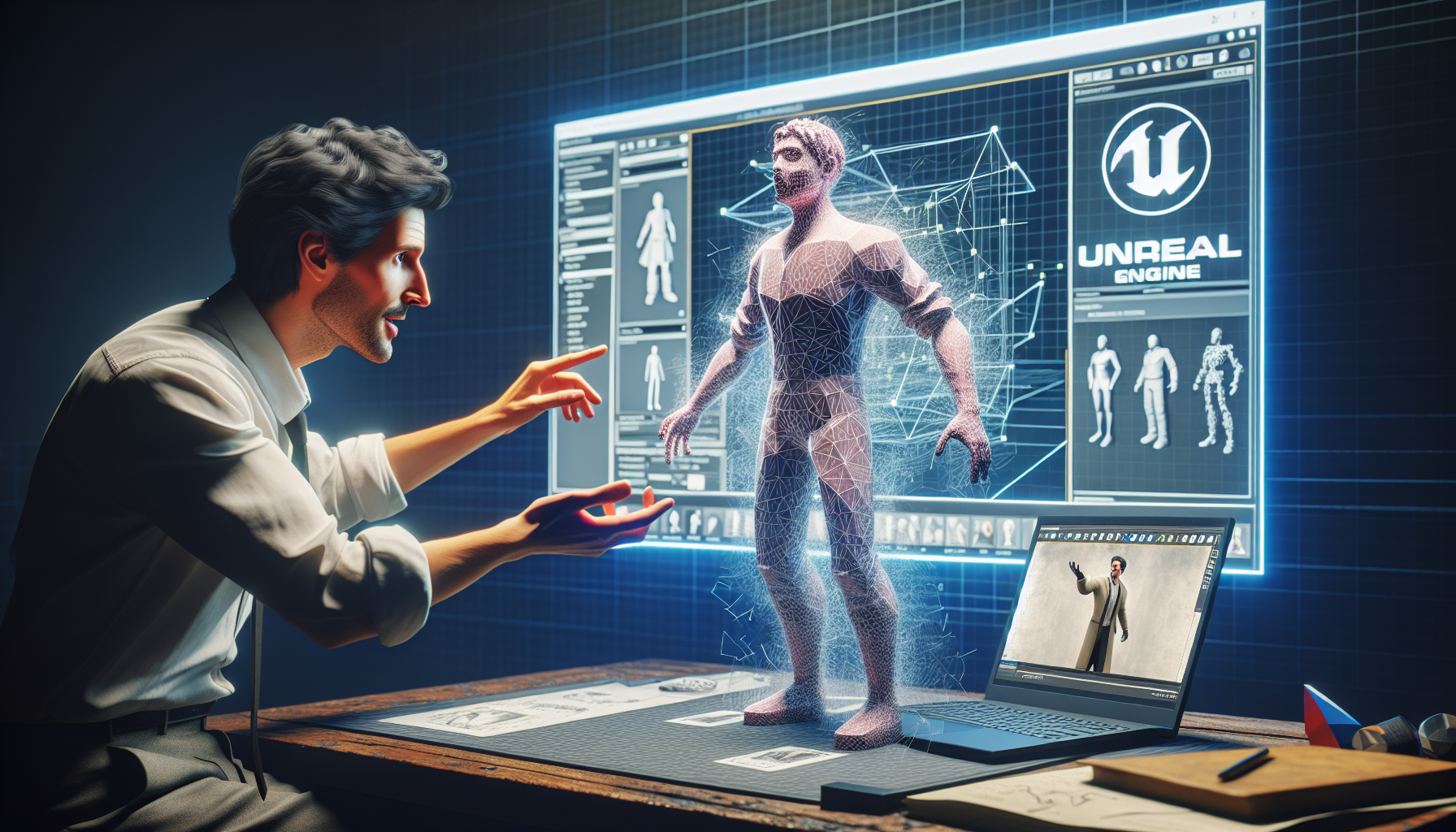
Hello, digital creators and aspiring game designers! Have you ever dreamed of crafting visually stunning environments and interactive experiences that captivate and inspire? Well, your gateway to creating digital masterpieces starts here with Unreal Engine 5 (UE5). Today, I’m going to guide you through the basics of the UE5 interface, helping you navigate through its complexities with the ease of scrolling through your favorite streaming service.
Step Into the World of Unreal Engine 5
Picture this: you’ve just walked into a vast digital canvas where every tool and feature is like a brushstroke that can paint life into your creations. That’s Unreal Engine 5 for you – a powerhouse for building breathtaking scenes and dynamic worlds. But before you start creating the next viral game or animated film, you need to familiarize yourself with the lay of the land.
Getting Started: Setting Up Your First Project
Launching Unreal Engine 5 for the first time feels a bit like your first day at a new school. Exciting, maybe a tad overwhelming, but oh, the possibilities! Here’s how to kick things off:
- Opening UE5: Double-click that Unreal Engine icon and watch as the project browser springs to life. Here you can access recent projects, or start fresh.
- Creating a New Project: Click on ‘New Project’ and choose between several templates. These templates are like your first day outfits—pick one that suits the game or visualization you want to create. Whether it’s a First-Person shooter or a Virtual Reality project, there’s something for everyone.
- Project Settings: Choose your project name and the directory to save it in. Just like picking your locker, make sure it’s a place you can easily access.
- Creating the Project: Hit ‘Create’ and watch as UE5 builds your project framework. This might take a moment, so feel free to sip some coffee while you wait.
Navigating the Interface: Your Digital Playground
Once your project loads, you’ll see several key areas. Let’s break them down:
Viewport
This is your window into the world you’re creating. Here, you can see everything you place in your scene, move around, and watch your world come to life.
Toolbar
Located at the top, the toolbar contains tools like play, pause, and stop (perfect for testing your game), along with options to manage the settings and features of the editor.
World Outliner
On the right, this is where all the elements in your current viewport are listed. Think of it as an index of everything in your digital world.
Details Panel
Also on the right, this panel gives you the scoop on the properties of the selected object in your viewport. Want to tweak the color or texture? This is where you make it happen.
Content Browser
At the bottom, consider this your toolbox. It holds all the assets like meshes, sounds, and scripts. You can drag and drop these items right into your viewport.
Setting Up Your First Scene
Let’s put a simple scene together:
- Adding Objects: Navigate to the Content Browser, find a 3D object like a sphere or a cube, and drag it into your viewport.
- Manipulating Objects: Select your object in the viewport. You can move, rotate, and scale using the tools in the toolbar—just like adjusting a picture in a digital photo frame.
- Play Around: Don’t be afraid to experiment. Try adding lights or other objects, and use the play button on the toolbar to walk through your scene.
Feeling At Home in UE5
Unreal Engine 5 might seem daunting at first, but like any good tool, it becomes an extension of your creative mind the more you use it. Experiment, play, and learn. Each click brings you closer to mastering the digital arts.
So, what will you create? A game, a film, or perhaps a simulation? The canvas is vast and waiting for your ideas. Dive in, and let’s see where your creativity takes you! And remember, every great journey begins with a single click. Happy creating!