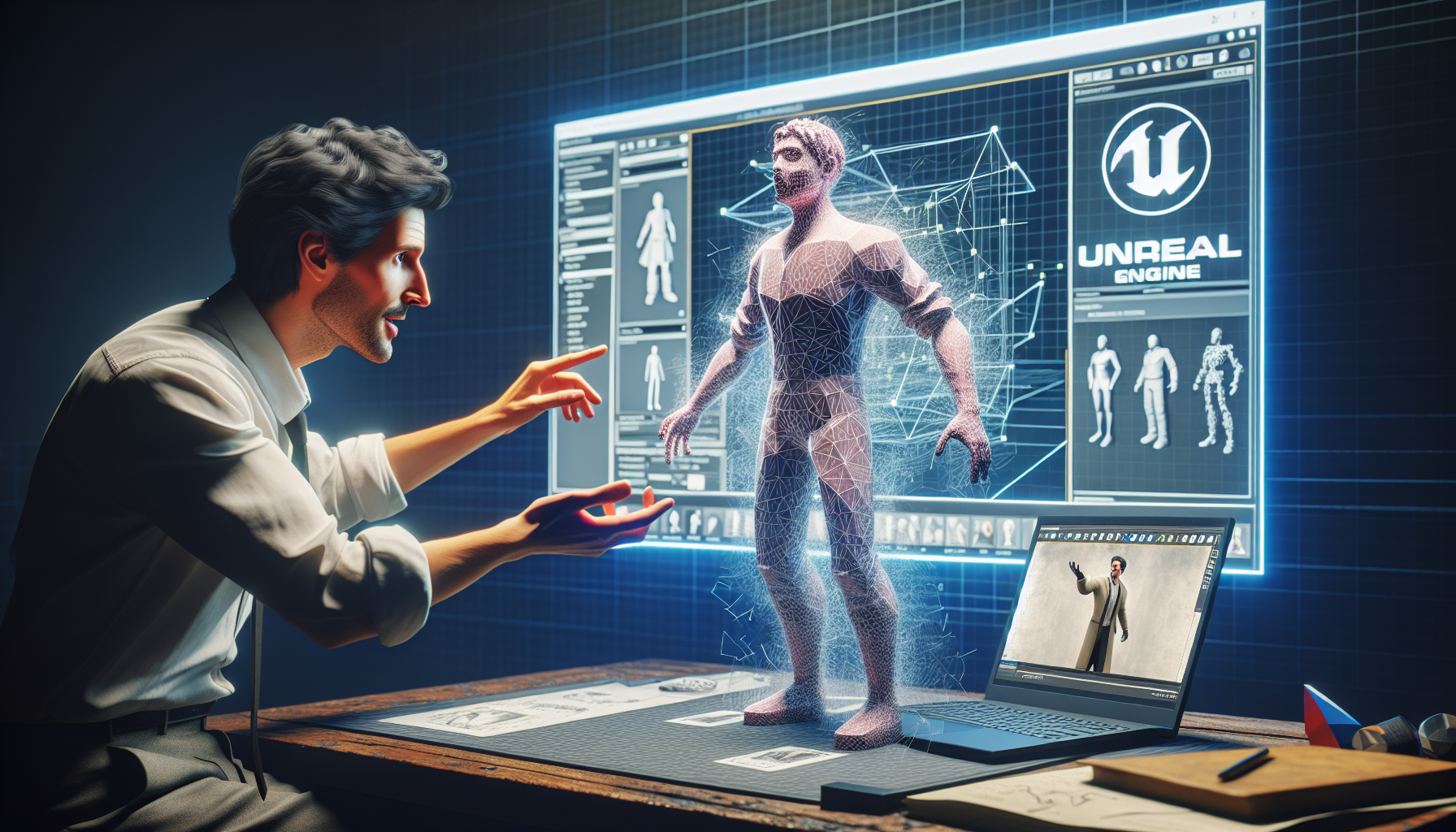
So, you’ve decided to populate your virtual world with more than just static trees and indestructible buildings? It’s time to introduce a character that can walk, talk, and maybe do a little jig if the mood strikes. Welcome to the no-small-feat universe of setting up a character in Unreal Engine, where every step is a mini-adventure and you’re the hero armed with nothing but digital tools and sheer willpower.
Why Characters Matter
Characters are the heart and soul of any interactive experience. They transform your digital landscapes from mere paintings into living, breathing worlds. Whether it’s a player-controlled protagonist or an AI-driven wanderer, characters are your story’s vessels. So, buckle up as we dive into the high-level basics of breathing life into your polygonal creations.
The Workflow Overview: A Roadmap to Digital Life
- Create Your Art Assets:
- Your journey begins in the mystical realm of 3D modeling software (3ds Max, Maya, Blender, take your pick). Here, you sculpt, texture, and rig your character, ensuring each limb moves just right—because nobody likes a hero whose arm bends backward when waving.
- Importing the Skeletal Meshes:
- Once your character can stand up and wave without looking like a noodle, it’s time to import this model into Unreal Engine. This is where you’ll decide if you’re going to create a new Skeleton asset or reuse an existing one. Choose wisely; skeletons are more than Halloween decorations here.
- Setting Up the Player Controller:
- This script or Blueprint is the brain of the operation. It translates player inputs (like pressing the forward arrow) into heroic actions (like charging valiantly forward). Without this, your character is just a pretty statue.
- Creating a Pawn or Character Blueprint:
- Think of this as the character’s remote control. It takes signals from the Player Controller and makes the character jump, duck, or break into a moonwalk. Choose between using a Pawn or a Character class—Pawns for simple movements, Characters for that extra flair with built-in support for movement physics.
- Constructing the Animation Blueprint:
- This is where the magic happens. The Animation Blueprint is the choreographer that syncs your character’s movements to its animations. It ensures your character doesn’t just move; it moves convincingly.
- Creating a GameMode Blueprint:
- If your game was a theater play, GameMode is the director. It doesn’t interact directly with your audience, but it sets the stage, choosing which PlayerController and Character Blueprints to use, ensuring the show goes off without a hitch.
- Playtesting:
- The grand finale. Hit play and watch as your character explores, interacts, and maybe glitches in hilarious ways. Back to the blueprint board if that happens!
Level Up With These Pro Tips:
- Test Continuously: Every step of character setup is a potential minefield of bugs. Test often to catch them early, especially before and after importing new assets or scripts.
- Keep It Organized: Naming conventions are your best friends. Keep your files and blueprints organized like a well-oiled library system. It’ll save you from a headache the size of your game world down the line.
- Explore Examples: Dive into Unreal Engine’s treasure trove of templates and content examples. They are like cheat sheets crafted by the pros.
Wrapping It Up: From Concept to Gameplay
Setting up a character in Unreal Engine might feel like assembling a spaceship with a manual written in an alien tongue, but fear not. With this high-level roadmap, you’re well on your way to creating characters that not only exist but live and breathe within your digital realms. So go forth, animate, script, and let your characters loose on the world. Just remember, with great power comes great responsibility—and possibly a few bugs to squash.