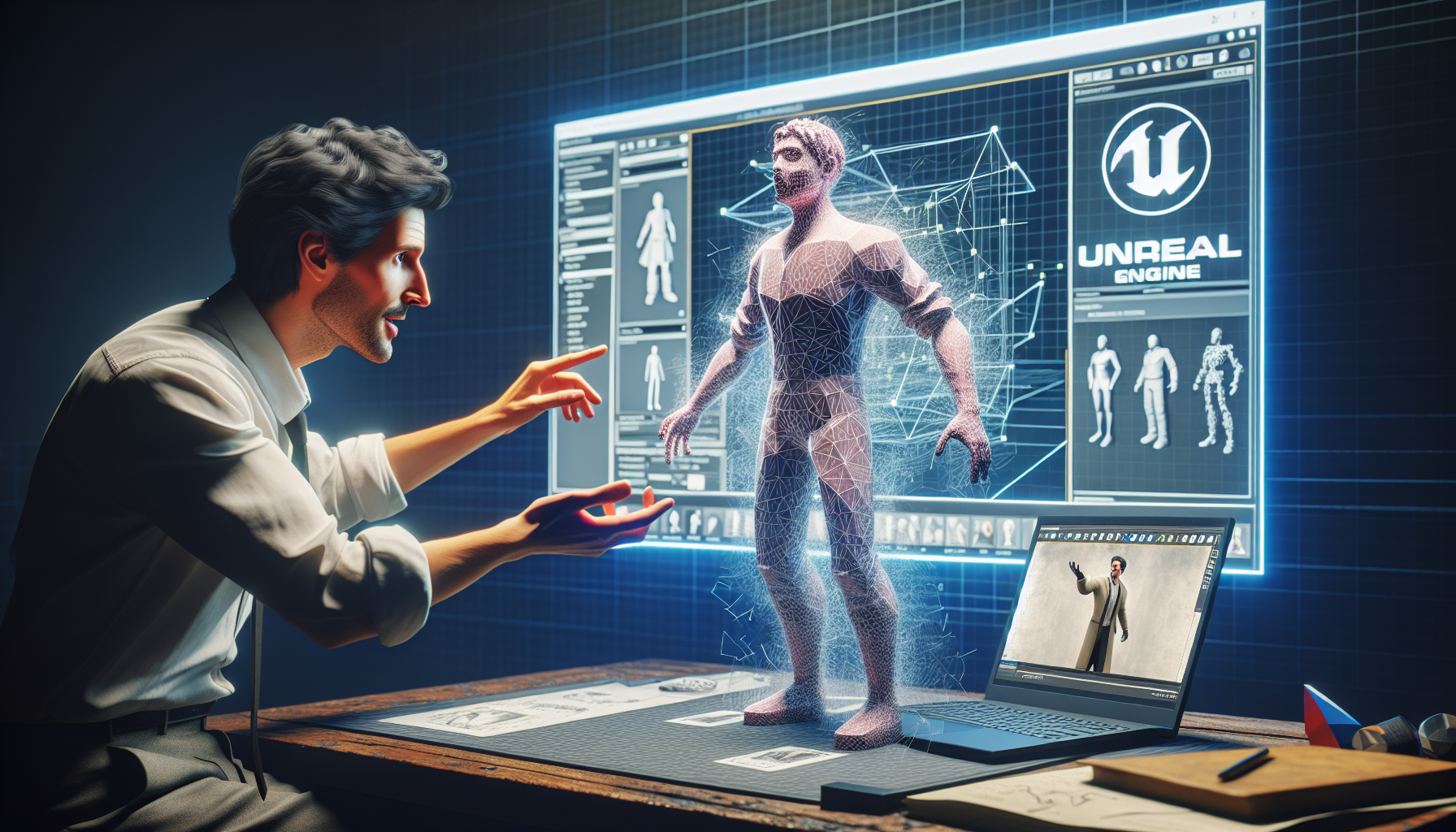
Unreal Engine 5.4 rolls out the red carpet for motion graphics designers with its brand-new Motion Graphics Mode. This feature is a big leap forward, turning Unreal Engine into a powerhouse for not only game development but also sophisticated motion graphics work.
Overview of Motion Graphics Mode
The Motion Graphics Mode in Unreal Engine 5.4 is a specially designed environment that caters exclusively to the needs of motion graphics designers. This mode equips users with a suite of tools tailored for creating dynamic visuals and animations directly within Unreal Engine.
Key Features of Motion Graphics Mode
- Dedicated Workspace: The mode introduces a dedicated workspace that includes an enhanced world outliner and intuitive hierarchy structures, making it easier to manage complex scenes and elements.
- 2D and 3D Tools: It supports both 2D and 3D design elements, allowing for seamless integration of flat graphics with volumetric objects, which is ideal for creating eye-catching motion graphics that pop.
- Advanced Cloners and Effectors: Borrowing from the familiar principles seen in Cinema 4D, the mode includes cloners and effectors that facilitate the creation of repetitive patterns and animated sequences with minimal manual input.
- Viewport Enhancements: The viewport in Motion Graphics Mode includes rulers, guides, and a grid system to assist in precise placement and alignment of objects, ensuring that designs are both beautiful and accurate.
- Effector Forces: These new tools allow designers to apply various forces to animate objects within the viewport, adding a new layer of dynamism to animations.
- Material Designer and SVG Importer: Enhanced material design capabilities, including the addition of FX layers, and the ability to import and manipulate SVG files directly, opens up a myriad of creative possibilities.
- Text 3D Improvements: With improved 3D text tools, creating and animating titles and other text elements is more intuitive and powerful, allowing for cinematic-quality text animations.
- Animation Tools: The animation tools have been beefed up to include features like stagger animations and masking modifiers, providing more control over animation flows and the interactions between animated elements.
Practical Applications
Motion Graphics Mode is perfectly suited for creating:
- Broadcast graphics like lower thirds, opening titles, and transitions.
- Promotional videos combining 3D elements with dynamic text.
- Complex data visualizations that require integration of real-time data feeds.
- Interactive educational content with animated diagrams and sequences.
Conclusion
With these comprehensive tools, Unreal Engine 5.4 is not just enhancing its gaming capabilities but is also venturing strongly into the domain traditionally occupied by dedicated motion graphics software. This integration signifies a shift towards more unified creative workflows, where designers can execute entire projects from concept to final render within a single platform.
For motion graphics designers eager to dive into 3D or existing 3D artists looking to expand their repertoire into motion graphics, Unreal Engine 5.4’s new Motion Graphics Mode offers an exciting new playground.
What kind of projects are you looking forward to creating with this new mode? Share your thoughts and plans with us in the comments below!