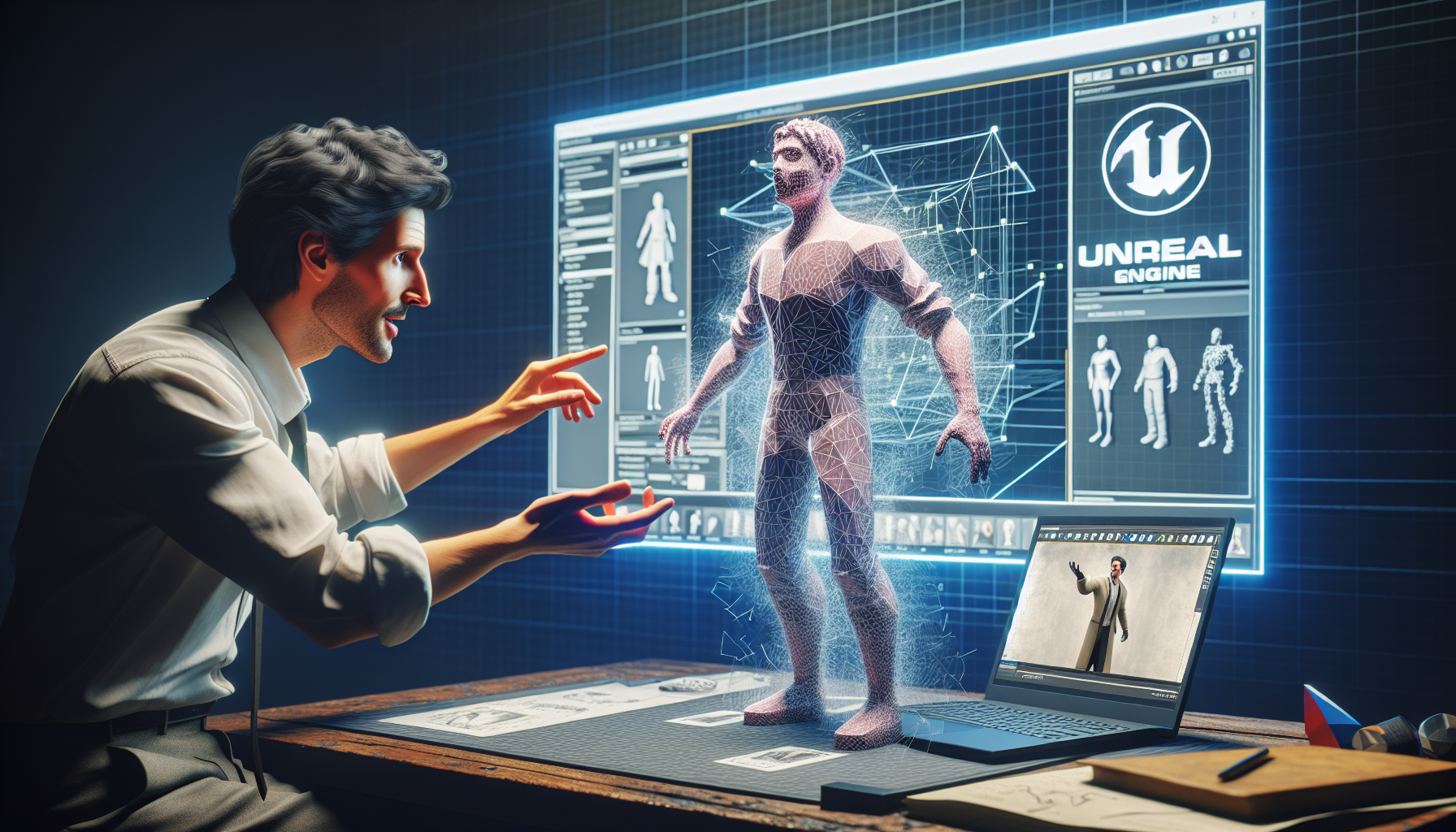
Ah, the art of facial animation in Unreal Engine—where every smirk, frown, and eyebrow arch can be crafted to cinematic perfection. But what happens when you’ve got a whole cast of characters who need to express their shock, awe, or general disdain across multiple scenarios? That’s where the magic of sharing facial animations comes into play, allowing you to puppeteer a diverse ensemble with a few masterful strokes.
Why Share Facial Animations?
Imagine this: you’ve painstakingly animated the perfect sneer for your villain that would make even a seasoned scoundrel proud. Now, you want your sidekick and mysterious passerby to share in this sneering spectacular without redoing the work from scratch for each character. That’s efficiency and consistency, all wrapped up in one neat package.
The Blueprint to Sharing: It’s All About the Curves
Unreal Engine makes it surprisingly simple to share facial animations across multiple characters, provided they play nice under one master skeleton. Here’s how you bring this to life:
- Master Skeleton First:
- Start with a base skeletal mesh. This is your golden template. Every character that needs to share facial animations must be rigged to this skeleton. Consistency in bone hierarchy and naming conventions is key here—no rogue bones allowed!
- The Magic of Pose Assets:
- Within your DCC (Digital Content Creation tool), animate your master face, expressing all the emotions you need. Import this as an FBX sequence into Unreal, where each frame captures a different facial curve at its peak.
- Right-click this imported sequence in Unreal and create a Pose Asset. This treasure chest of poses holds all your facial expressions, ready to be mapped onto any character rigged to your master skeleton.
- Curves and More Curves:
- These are the secret sauce. Each curve represents a different facial expression captured in your Pose Asset. When applied to another character, these curves adjust the face to reflect the intended expression without the need for bone transformations, ensuring no awkward misalignments.
Workflow Wizardry: Making Those Faces Move
Now, let’s get those characters expressing:
- Animation Blueprints to the Rescue:
- Set up an Animation Blueprint for your character. Here’s where you define how and when those expressions change based on gameplay. It’s like scripting mood swings.
- Curve-Driven Animation Nodes:
- Inside your Animation Blueprint, plug in a curve-driven animation node. This node will be your conductor, orchestrating the facial expressions by varying the curve values. These values pull from your Pose Asset, making your character grimace, grin, or gawk as required.
- Sharing Across the Board:
- If you’ve got more characters in the lineup, simply extend this setup to them. Since they share the master skeleton and the Pose Asset, all you need is to adjust their Animation Blueprints to reflect their unique personalities or stories.
Tips for Flawless Performance
- Keep It Clean: When dealing with multiple curves and poses, organization is paramount. Label everything clearly, and prune any unused curves to keep your system running smoothly.
- Test Extensively: What works in theory doesn’t always pan out on the digital stage. Test animations on all characters to catch any oddities in how different meshes respond to the shared animations.
- Adjust for Individuality: Even with shared animations, tweak them to fit each character’s proportions and quirks. A generic smile might need a little adjustment to fit a wider jaw or a smaller face.
Closing Act: Bringing Your Characters to Life
Sharing facial animations via curve-driven methods in Unreal Engine not only saves time but also ensures a cohesive emotional palette across your entire cast. It’s about being smart, not hardworking—letting you focus on perfecting those emotional beats while Unreal handles the heavy lifting.
So go ahead, make them laugh, cry, and scowl to their polygonal hearts’ content. After all, in the world of game development, a face is worth a thousand lines of code.