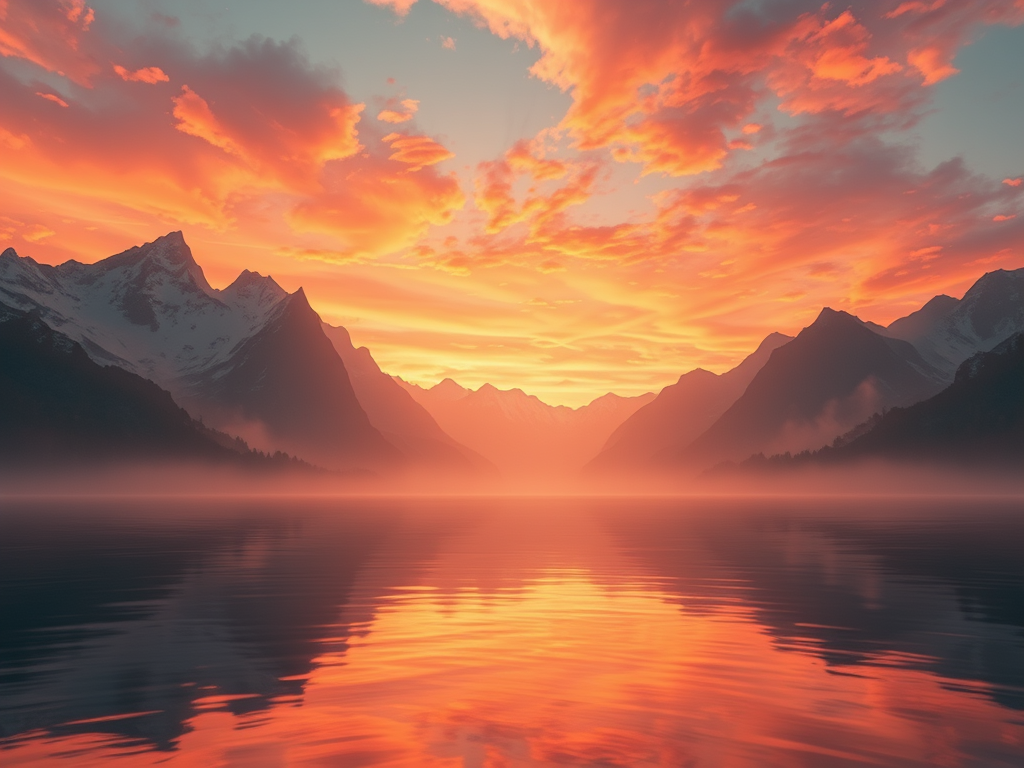
Imagine describing a beautiful sunset to an artist and watching them bring your vision to life on canvas. That’s essentially what Stable Diffusion does—but instead of brushes and paints, it uses powerful math and cutting-edge AI technology to transform your words into breathtaking images.
Sounds like magic, right? Let’s dive into how this process works in a way that anyone can understand. No coding, no jargon—just the story of how AI creates art.
Step 1: The AI Learns to See the World
Before Stable Diffusion can generate art, it has to learn what the world looks like. To do this, it studies millions (sometimes billions) of images paired with descriptions. Think of it like flipping through a giant photo album where every picture comes with a caption:
- A snowy mountain under a clear blue sky.
- A futuristic cityscape at night.
- A playful puppy chasing a ball.
By analyzing these pairs, the AI learns to associate certain words with specific features in an image. For example:
- “Mountain” might translate to jagged peaks.
- “Futuristic” might mean sleek, glowing buildings.
- “Puppy” might conjure soft fur and floppy ears.
Over time, the AI builds a mental map of what these concepts look like.
Step 2: Understanding Your Prompt
When you type a prompt—say, “a serene lake surrounded by mountains during sunset”—the AI breaks it down into its core ideas:
- Serene: Calm, peaceful vibes.
- Lake: A body of water.
- Mountains: Peaks in the background.
- Sunset: Warm orange and pink colors.
These ideas aren’t just treated as words; they’re converted into a kind of mathematical blueprint. It’s like giving the AI a recipe for the image you want.
Step 3: Starting with Chaos
Here’s where things get interesting. Instead of starting with a blank canvas, Stable Diffusion begins with… noise. Imagine a TV screen showing static—tiny, random dots scattered everywhere. That’s the starting point.
Why? Because the AI is going to sculpt the image out of this chaos. Think of it like a sculptor starting with a block of marble. The AI needs something to work with, and noise provides that.
Step 4: Finding Patterns in the Noise
Now the AI gets to work. It looks at your prompt and starts gently reshaping the noise, layer by layer, into something meaningful. Each layer brings the image closer to your vision:
- The first pass might reveal vague blobs of color—blue for the lake, orange for the sunset.
- The next layers refine the shapes—adding the outline of mountains or the glow of sunlight on the water.
- Finally, the AI sharpens the details, like the ripples in the lake or the shadows cast by the peaks.
It’s a bit like developing a photograph in a darkroom. The picture emerges gradually, becoming clearer with every step.
Step 5: Bringing Everything Together
As the AI works through each layer, it constantly checks back with your prompt to make sure the image stays true to your description. This is where its earlier learning comes in handy:
- It knows that “serene” means soft lighting and calm colors.
- It understands that “lake” should reflect the mountains and sky.
- It ensures that “sunset” adds the right hues to the scene.
By the end of the process, the static has transformed into a fully realized image that captures your vision.
But Wait—How Does It Know to Be Creative?
This is where diffusion models like Stable Diffusion shine. They aren’t just copying images they’ve seen before. Instead, they’re combining bits and pieces of their training data to create something new. It’s as if the AI has a mental library of art styles, textures, and colors, and it’s remixing them to match your prompt.
For example:
- If your prompt includes “cyberpunk,” the AI might borrow neon colors and futuristic elements from the sci-fi images it’s studied.
- If you add “in the style of watercolor,” it adjusts the textures to mimic brushstrokes and soft gradients.
The result? A one-of-a-kind image that feels fresh and original.
Why It’s Called “Diffusion”
The term “diffusion” comes from how the AI handles that initial noise. It starts with a chaotic image (static) and slowly “diffuses” meaning into it by removing the randomness. It’s like watching fog lift from a landscape, revealing the scene underneath.
The Human Touch
Here’s the beauty of tools like Stable Diffusion: while the AI does the heavy lifting, you’re still the creative director. Your prompt is the guiding star, and how you describe your vision shapes the final result. Add modifiers like “vivid colors,” “photorealistic,” or “impressionist style,” and watch as the AI tailors the output to your preferences.
The Future of Creativity
Stable Diffusion and similar technologies aren’t just tools—they’re collaborators. They take your ideas and turn them into something tangible, whether you’re a professional artist, a hobbyist, or just someone who loves exploring creative possibilities.
So, the next time you type a prompt into Stable Diffusion, remember: you’re not just generating an image. You’re co-creating with a machine that has learned to see the world through the eyes of millions. And that? That’s pretty magical.