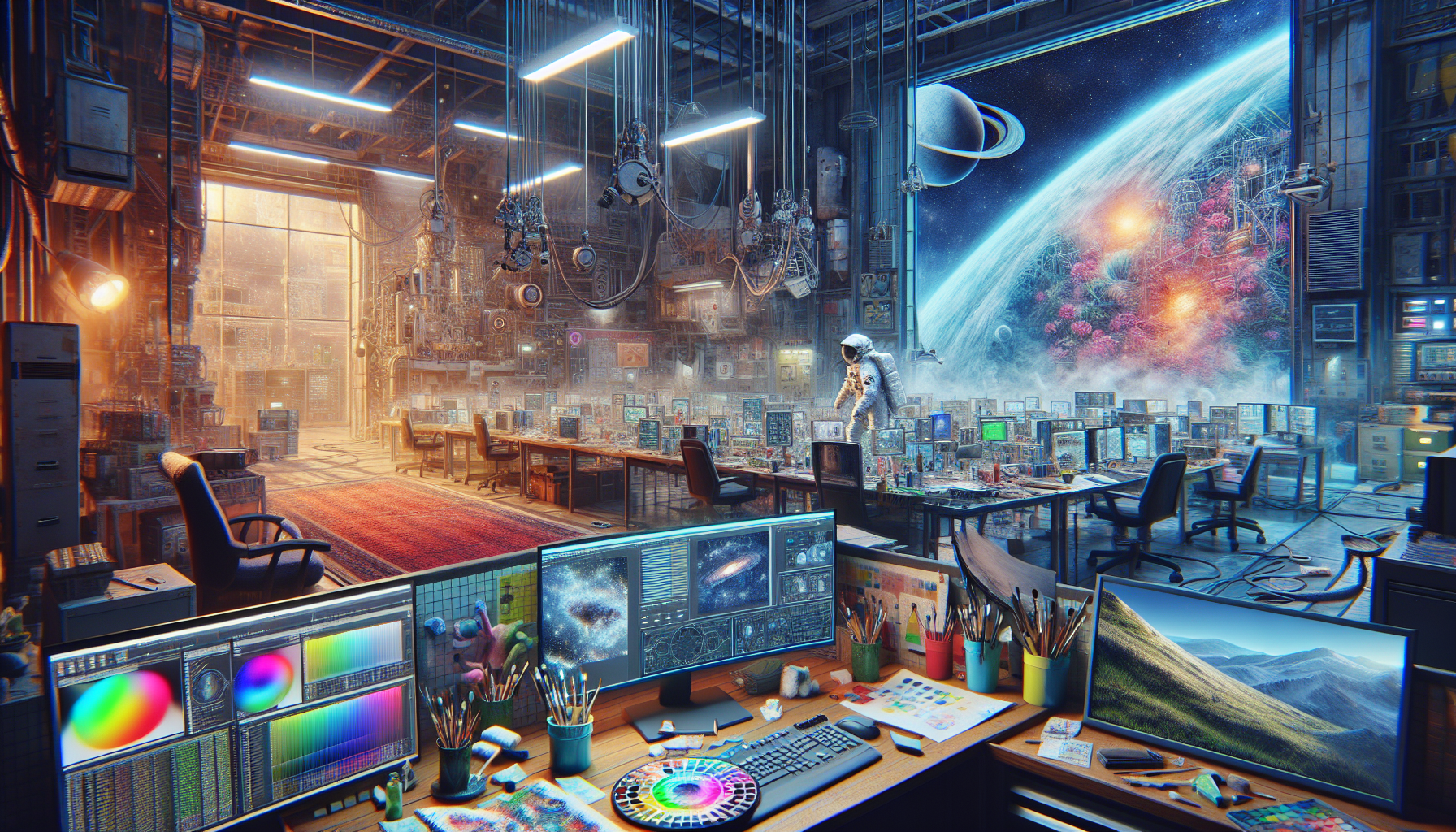
Welcome to the fantastical, sometimes overwhelming world of Unreal Engine 5 (UE5). Whether you’re a seasoned maestro of digital canvases or a newcomer with a fresh palette of tools, diving into UE5 can feel like navigating a labyrinth designed by M.C. Escher. Fear not! This guide will act as your trusty map and compass, walking you through the basics of setting up, importing assets, and getting your creative gears turning in UE5.
Step 1: Setting Up Your Digital Studio
Just like any artist needs a studio, your first step in UE5 is to set up your project. Think of this as arranging your workspace:
- Open Unreal Engine from the Launcher: This is akin to unlocking your studio door.
- Create a New Project: Select the Games > Blank template. Enable C++ and Starter Content to give yourself a variety of materials and models to play with.
- Name Your Project ‘Artist_QuickStart’: Personalize your space! Name it something that screams ‘you.’
- Click Create Project: Watch as UE whirs to life, ready for your command.
As soon as you hit that button, UE5 will open up, resembling something between a NASA control room and an artist’s loft. Visual Studio will also pop up—think of it as your sophisticated set of brushes and paints.
Step 2: Organizing Your Palette
Before you start throwing digital paint around, let’s get organized:
- Download the Quick Start Assets: These are like your basic set of paints and brushes. Download here.
- Create a Folder in the Content Browser: Name it ‘QuickStartContent.’ This will be where you keep all your assets tidy and ready.
- Extract and Import Your Assets: Bring your downloaded treasures into UE5. Navigate to the QuickStartContent folder and use the Import button to start bringing in meshes and textures. Remember, organization is key to not losing your mind in a sea of files.
Step 3: Bringing Your World to Life
Now that you’ve got your assets imported, it’s time to start playing around:
- Prepare Meshes for Import: If you’re bringing in your own creations, ensure they are exported correctly from your preferred 3D art tool (like Maya or 3ds Max). Use the FBX 2018 format to avoid any compatibility tantrums UE might throw.
- Create and Edit Materials: Jump into the Material Editor to start tweaking the visual properties of your assets. This is where you can get your hands dirty. Adjust colors, shininess, and textures to make everything look just right.
- Apply Materials to Meshes: Drag and drop your newly created materials onto your meshes. It’s like dressing up your sculptures in their Sunday best.
Step 4: Showtime! Placing Assets in Your Level
The stage is set, and now it’s time for the grand reveal:
- Open the Static Mesh Editor: This tool lets you view and modify the 3D models you’ve imported.
- Set an Actor’s Default Material: Choose the material that your model will wear as default attire when it struts onto the scene.
- Drag and Drop Assets into Your Level: Take your beautifully dressed models and place them into your digital world. Position them with care, like arranging figures in a diorama.
Final Thoughts: Beyond the Quick Start
Congratulations! You’ve set up your project, organized your assets, tweaked materials, and decorated your first digital scene in Unreal Engine 5. But this is just the beginning. Unreal Engine is a vast universe of tools and possibilities, waiting for you to explore deeper.
Feeling adventurous? Here are a few more paths to wander:
- Explore Advanced Material Editing: Get intricate with your material properties and really push the visual quality.
- Dive into Animation: Bring your creations to life with some movement.
- Interact with the Community: Share your creations, get feedback, and collaborate.
Remember, every great artist was once a beginner stepping up to their first canvas—or in your case, a blank Unreal Engine project. Now go forth and create something unreal!