In the visually demanding world of game design and virtual environments, anti-aliasing and upscaling are like the digital equivalent of airbrushing in a photoshoot. They smooth out the rough edges and enhance resolution, ensuring that your scene doesn’t look like it just rolled out of bed. Welcome to the realm of refined graphics in Unreal Engine 5, where we dive into how these crucial techniques polish your projects until they shine.
What is Anti-Aliasing?
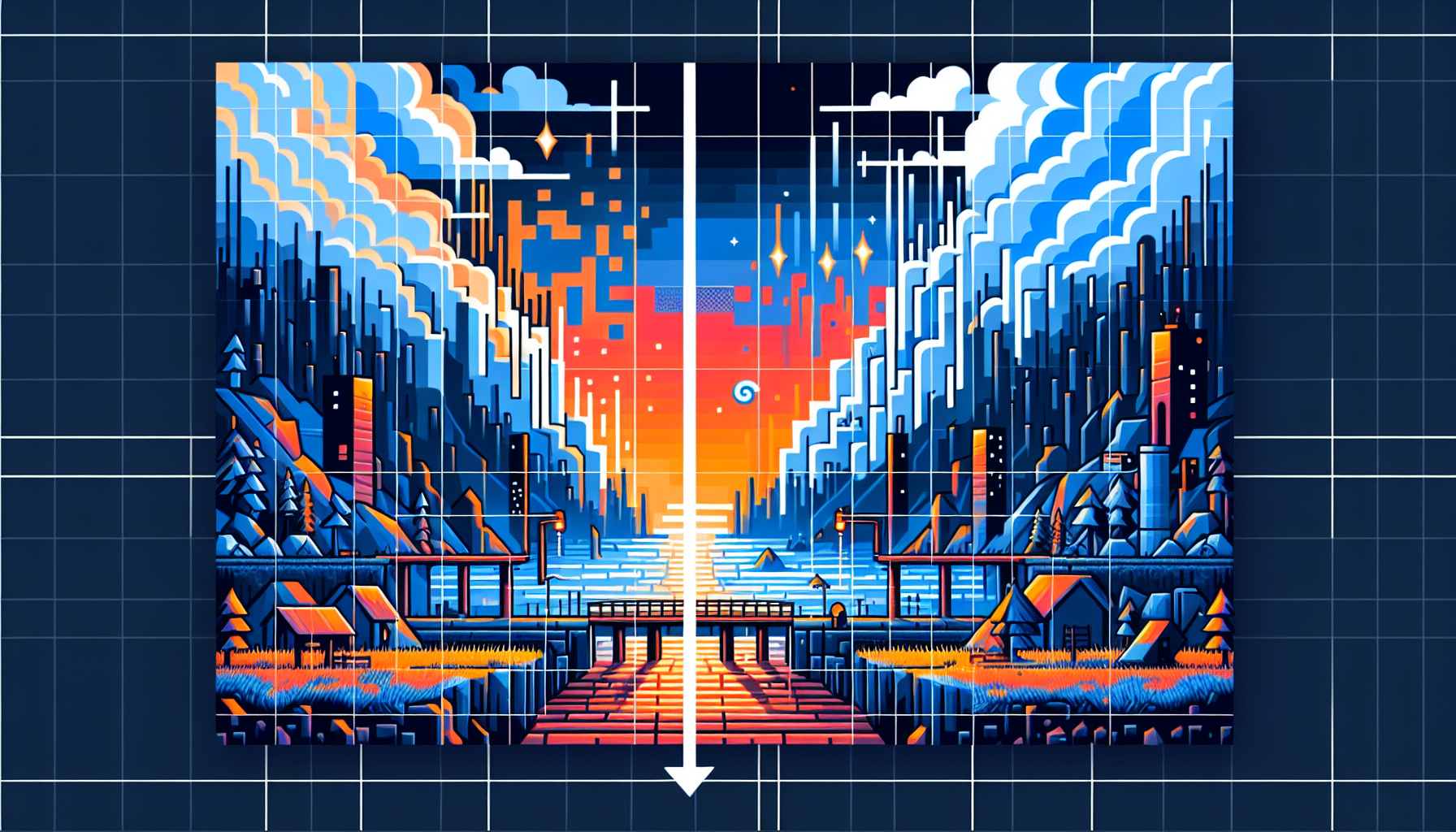
Imagine you’re drawing a diagonal line on a square grid; it’s going to look more like stairs than a smooth incline. Anti-aliasing is the graphical technique used to smooth out these “staircase” effects (known as aliasing) that appear on edges of objects in digital images. It’s the tech that tells the harsh lines to take a day off, blending them into the scene so everything looks more natural and less like an 8-bit arcade game.
Types of Anti-Aliasing in Unreal Engine 5
Unreal Engine 5 offers several anti-aliasing techniques, each with its strengths and use cases:
- Temporal Anti-Aliasing (TAA): TAA is the default and most commonly used anti-aliasing method in Unreal Engine. It works by accumulating samples over multiple frames to produce a smooth, stable image. It’s great for dynamic scenes but can sometimes introduce a softening effect that might blur fine details.
- FXAA (Fast Approximate Anti-Aliasing): FXAA is a faster, post-process anti-aliasing technique that’s less demanding than TAA. It’s a good option for mobile or VR projects where performance is critical, though it might not be as effective at smoothing out very sharp edges.
- MSAA (Multi-Sample Anti-Aliasing): MSAA is supported for forward-rendered projects and provides high-quality anti-aliasing by sampling each pixel multiple times at different positions. It’s more performance-intensive and typically used in projects where visual quality is paramount over performance constraints.
Upscaling Techniques: Making the Most of Your Pixels
Upscaling is the process of increasing the resolution of an image using various algorithms to make it appear higher in quality and detail than it naturally is. In Unreal Engine 5, upscaling is often used in tandem with anti-aliasing to improve performance while maintaining visual fidelity.
- Temporal Upscaling: This method combines data from previous frames to enhance the current frame’s resolution, often used alongside TAA to boost image quality without a substantial performance hit.
- FidelityFX Super Resolution (FSR): Supported in Unreal Engine, FSR is AMD’s upscaling technology that increases frame rates by rendering scenes at a lower resolution and then upscaling them. It’s a great option for maintaining high visual quality on lower-end hardware.
Setting Up Anti-Aliasing and Upscaling
- Configure Anti-Aliasing:
- Go to your project’s settings and select the ‘Rendering’ section.
- Here, you can choose your preferred anti-aliasing method based on your project’s needs.
- Implement Upscaling:
- In the same rendering settings, you can adjust upscaling settings.
- If using Temporal Upscaling, ensure it’s compatible with your chosen anti-aliasing technique for the best results.
Best Practices for Anti-Aliasing and Upscaling
- Balance Quality and Performance: Experiment with different settings to find the right balance for your project. Higher anti-aliasing and upscaling can often lead to higher resource use.
- Test on Various Hardware: Since hardware significantly impacts how these processes perform, test your settings on different devices to ensure consistent quality.
- Regular Updates: Stay updated with the latest techniques and improvements from Unreal Engine updates. Both anti-aliasing and upscaling technologies are continually evolving.
Conclusion: Polishing Your Pixels
By understanding and implementing anti-aliasing and upscaling in Unreal Engine 5, you can dramatically improve the visual quality of your projects while optimizing performance. These tools are essential for delivering smooth, crisp visuals that can make your digital worlds come alive. So go ahead, smooth out those edges and scale up those resolutions—your stunning virtual environments await!