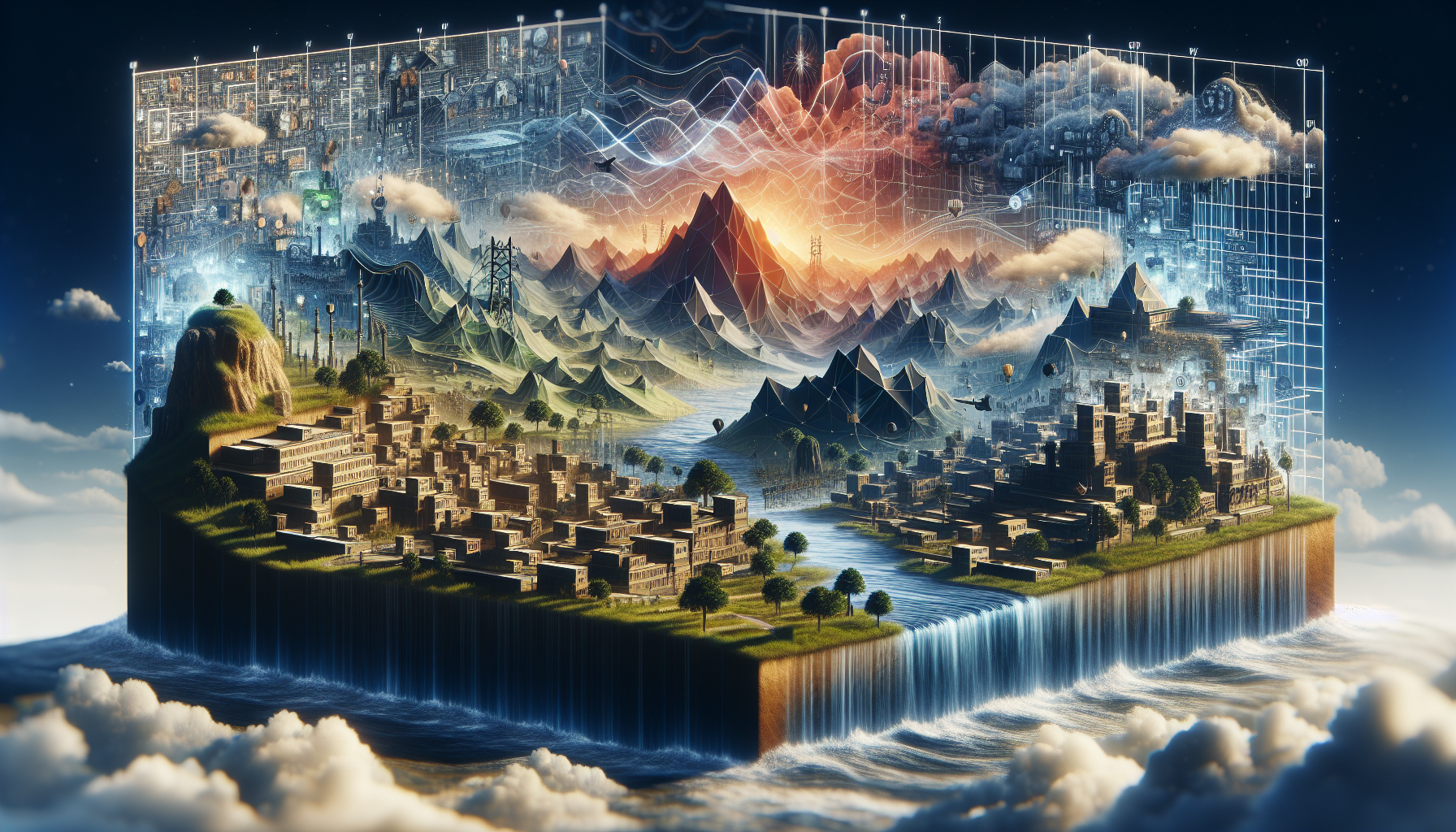
In the world of game design, there’s something almost mystical about procedural content generation (PCG). It’s like having a cauldron where you throw in a pinch of code, a dash of algorithms, and—voilà—you’ve brewed an ever-changing universe that can surprise even its creators.
Unreal Engine’s procedural content generation framework turns developers into digital wizards, empowering them to conjure vast, complex worlds with the wave of a metaphorical wand. Let’s pull back the curtain on this magical process and see how it’s transforming the landscape of digital environments.
What Is Procedural Content Generation?
Procedural content generation is like the autopilot of game world creation. Instead of manually crafting every hill, dungeon, and building, PCG uses algorithms to generate these features dynamically. It’s the difference between hand-knitting a sweater and programming a machine to do it for you—except the sweater is a sprawling digital world that can regenerate itself at every playthrough.
The Magic Behind the Scenes
At its core, Unreal Engine’s PCG framework is a set of tools and systems designed to automate the creation of game content. This can range from landscapes and architecture to quests and NPCs. Here’s how it shakes down:
1. Landscape Generation: Imagine clicking a button and watching as mountains rise, valleys form, and rivers carve paths through a freshly created world. That’s what PCG does with landscapes, using mathematical models to simulate natural processes.
2. Architectural Assembly: PCG isn’t just about the natural world. It can also stack bricks and mortar, generating intricate buildings or whole cities from predefined rules or patterns. This means every player could potentially explore a unique city layout that no other player has seen before.
3. Quest and Storyline Creation: More than just physical space, PCG can also weave narratives. By defining a set of potential plot points, characters, and conflicts, PCG can stitch together quests and stories, making each player’s game experience uniquely their own.
4. Resource Distribution: Where are the gold and the glory? PCG helps scatter resources throughout the game world in a way that feels random but is carefully controlled to keep gameplay balanced and engaging.
Brewing Your Own Procedural Potion
Step 1: Define Your Parameters
- Start by deciding what aspects of your game will benefit from being procedurally generated. Is it the environment, the items, or the storyline?
Step 2: Choose Your Algorithms
- Select the algorithms that best fit your needs. Noise functions like Perlin or Simplex are great for natural landscapes, while grammar-based systems can generate complex structures and narratives.
Step 3: Set Rules and Constraints
- Procedural doesn’t mean random. Set rules to guide the generation process, ensuring that the content produced fits within your game’s world and design principles.
Step 4: Integrate and Test
- Implement your PCG systems within Unreal Engine and test rigorously. The beauty of PCG lies in its unpredictability, but this also means you need to be thorough to catch any odd or game-breaking anomalies.
Why Embrace the Wizardry of PCG?
Endless Variety: PCG provides a nearly infinite variety of content, keeping the game fresh and exciting for players long after its release.
Reduced Workloads: By automating parts of the content creation process, developers can focus on crafting richer, more detailed game experiences.
Unique Player Experiences: When no two playthroughs are the same, players have a more personal connection to the game, driving engagement and replayability.
The Spellbook Awaits
Procedural content generation in Unreal Engine offers a realm of possibilities, where worlds blossom from algorithms, and stories write themselves. It’s a form of digital magic that invites players into an ever-evolving narrative, crafted by the underlying logic of the game itself.
So, don your wizard’s hat, wield your coding wand, and prepare to cast spells that bring entire worlds to life. In the universe of PCG, the only limit is the scope of your imagination and the depth of your algorithms.